


Trending News
Japan vs Sweden FIFA World Cup 2026 Preview: Everything you need to know

Japan vs Sweden: Match details
Japan vs Sweden will kick-off on 25 June 2026 at 23:00 GMT and 18:00 EST.
.jpg?format=pjpg&quality=60&auto=webp&width=1200 "Japan vs Sweden FIFA World Cup 2026 Preview: Everything you need to know 1")
Japan vs Sweden: Match Context
The upcoming clash in Texas carries enormous implications as both Group F nations look to build upon or salvage their campaigns following highly intense Matchday 2 outings. Following the second round of fixtures that shook up the early group dynamics – with Samurai Blue asserting total dominance via a clinical 4-0 victory over Tunisia in Monterrey and Sweden frustratingly forced to process a heavy 5-1 defeat against the Netherlands in Houston – the margin for error at Dallas Stadium (AT&T Stadium) has shrunk drastically. Both camps head to Arlington knowing that tactical adaptability and swift physical regeneration from those intense encounters will completely dictate the trajectory of their knockout round ambitions.
Japan head coach Hajime Moriyasu must ensure his side maintains defensive focus and clinical efficiency after a dominant four-goal performance put them firmly in control of their qualification destiny. Moriyasu will rely on his dynamic attacking focal points – anchored by elite technical midfielders and creative wide options – to dictate tempo, dominate central areas, and unlock a highly disciplined European backline. Standing across from them is a structurally sound and desperate Sweden side guided by Graham Potter. Boasting a squad packed with top-tier physical pedigree, the Blågult possess a stubborn blueprint and a lethal counter-attacking edge spearheaded by Alexander Isak and Dejan Kulusevski that thrives when flawless discipline is demanded.
Staged at the state-of-the-art Dallas Stadium, this encounter will be an intricate chess match of tactical adjustments. Neither side can afford another defensive breakdown in transition, making mid-block communication and rapid vertical tracking the decisive elements. Japan will view this match as the ideal platform to solidify their status as undefeated frontrunners, while Sweden enters the pitch eager to weaponise their fearless spirit, exploit spaces left behind by advancing full-backs, and claim a vital maximum-point result to secure safe passage out of Group F. With group permutations beginning to crystallise, the sheer gravity of securing their place in the knockout phases will dominate the tactical approach from the very first whistle.
Read more: How to watch and live stream the 2026 FIFA World Cup
How did both teams fare on Matchday 2?
Sweden 1–5 Netherlands
Graham Potter’s squad suffered deep frustration and structural collapse at Houston Stadium in Texas, as a toothless defensive performance forced them to process a heavy 5-1 defeat against a clinical Netherlands side. Looking to build momentum in the group, the Blågult opened the match defensively vulnerable and struggled to generate regular momentum against Ronald Koeman’s ruthless attacking machine.
The defensive line cracked early as Brian Brobbey struck twice in the 5th and 17th minutes to give the Dutch complete control. While Anthony Elanga briefly sparked hope by capitalising on a transitional sequence to pull a goal back in the 59th minute, structural discipline completely dissolved. Cody Gakpo hammered home a brilliant quickfire second-half brace, and Crysencio Summerville added a late 89th-minute strike to rub salt into the wounds. To make matters worse, tactical frustration boiled over as Gabriel Gudmundsson, Yasin Ayari, and Lucas Bergvall all picked up cautions, leaving Sweden on three points and desperately chasing a defensive reset.
Japan 4–0 Tunisia
Hajime Moriyasu’s men put on a deeply disciplined and commanding display at Monterrey Stadium, keeping a flawless clean sheet to breeze past Tunisia with a vital 4-0 victory. The Asian heavyweights took total control of the possession rhythms early on, completely suffocating the North African block with direct vertical velocity.
The crucial breakthrough arrived almost immediately. In just the 4th minute, midfielder Daichi Kamada found space to open the scoring. Clinical forward Ayase Ueda doubled the lead in the 31st minute, completely setting the tempo before the break. Japan’s rigid structural organisation took over completely from there; Junya Ito slotted home a third in the 69th minute before Ueda completed his spectacular display by firing home a clinical regular goal in the 83rd minute. Moriyasu’s flawless blueprint successfully closed out the remaining minutes to restrict Tunisia’s transitions and secure all three points, putting Japan in a commanding position in Group F.
Read more: How to watch the 2026 FIFA World Cup for free
What tactical adjustments must both managers make?
Japan (Hajime Moriyasu)
Hajime Moriyasu does not need to abandon the courageous, high-tempo attacking blueprint that allowed the Samurai Blue to claim a dominant victory, including a clinical 4-0 win over Tunisia in Monterrey. The vertical movement, sharp wide rotations, and transitional excellence driven by fluid midfield pieces like Daichi Kamada and Ayase Ueda prove that Japan possesses the necessary tactical toolbox to control matches on the global stage.
However, Moriyasu must ensure his side maintains total defensive focus against teams that trap possession efficiently. In their previous outings, Japan’s aggressive attacking shape occasionally left vast pockets of space exposed when full-backs pushed deep into the final third. Against a Sweden side built on an imposing physical and athletic pedigree, turning the ball over cheaply in transit will be fatal. Moriyasu’s primary adjustment must focus on his defensive midfield pivot – specifically demanding rigid positional awareness from his anchoring midfielders to choke off central half-spaces and prevent European counter-attackers from isolating his centre-backs.

Sweden (Graham Potter)
Graham Potter does not need to completely dismantle the pragmatic template that saw his side dictate large stretches of play before a ruthless attacking machine forced a heavy 5-1 defeat against the Netherlands in Houston. The core defensive framework and engine-room physical presence remain reliable assets, but Matchday 3 demands a sharp offensive recalibration in how the team controls and progresses the ball.
Against Japan’s aggressive high block, staying entirely horizontal or cycling possession too slowly in the middle third will lead to unsustainable fatigue and predictable attacking avenues. Potter’s tactical adjustment must focus on his engine room, instructing senior midfield leaders to transition the ball forward with far greater vertical velocity when possession is won. When Sweden advances, they must aggressively exploit the wide channels left vacant by Japan’s advancing full-backs. Utilising the explosive, direct overlapping runs of dynamic wing-backs to stretch the Japanese defensive line will be critical to pulling their compact shape apart. This wide expansion is paramount to freeing up high-value pocket spaces for talisman Alexander Isak to exploit, preventing the attack from getting completely suffocated in central traffic.
What is the latest team news ahead of Matchday 3?
Japan team news
Hajime Moriyasu’s primary challenge heading into the state-of-the-art Dallas Stadium is addressing the final-third efficiency of his squad while managing the physical workload of his marquee stars. Fortunately for the Samurai Blue, they emerged from their high-octane 4-0 victory against Tunisia with no fresh injury anxieties or suspension concerns, leaving Moriyasu with a highly competitive pool to choose from.
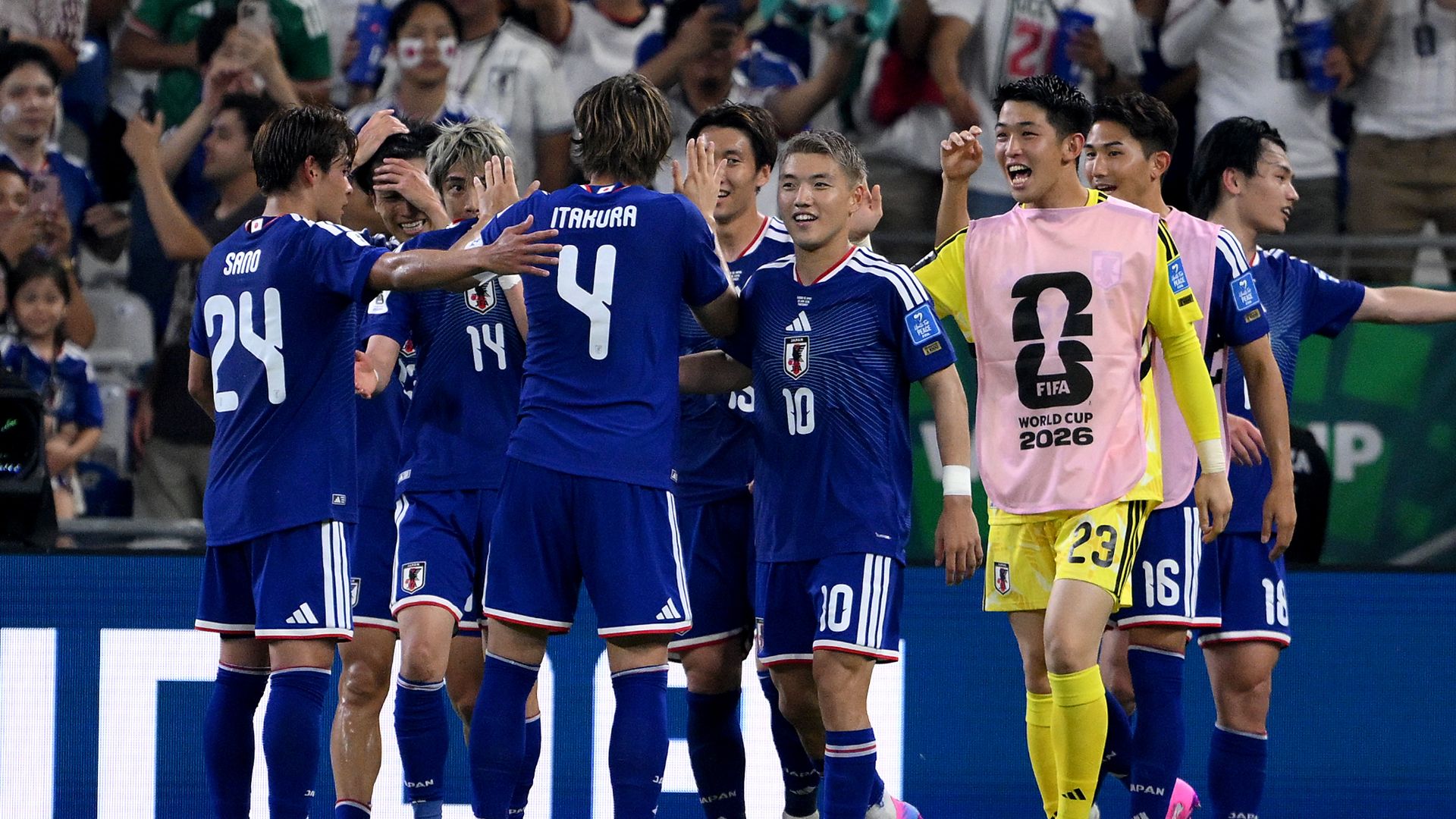
Japan will build around their verified 3-4-3 tactical framework. Goalkeeper Zion Suzuki will retain his place between the posts, looking for continued rigid protection from his backline. Centre-backs Hiroki Ito and Takehiro Tomiyasu will continue their defensive partnership alongside Ko Itakura in the back three.
The midfield layout remains intact from the previous outing to balance defensive coverage. Keito Nakamura and Ritsu Doan will handle the wide wing-back responsibilities, while Daichi Kamada and Ao Tanaka marshal the central engine room to ensure transitional stability and technical pacing.
The undisputed focal point of Japan’s attacking threat remains their fluid frontline. Matchday 2 brace hero Ayase Ueda will confidently lead the line, flanked by Kota Sano on the left wing and Junya Ito on the right wing, who retains his spot after opening his tournament goal account.
Sweden team news
Graham Potter faces a much more intricate selection puzzle as he prepares his side to bounce back in Group F. The biggest talking point surrounding the Blågult is managing the immense physical toll and psychological momentum from their previous match, which demanded a grueling shift and exposed structural flaws that must be quickly patched over.
Sweden’s core structural foundation will revolve around a fluid 3-5-2 setup. Defensively, centre-backs Victor Lindelöf and Gustaf Lagerbielke will anchor the central line alongside Isak Hien in the back three, while goalkeeper Kristoffer Nordfeldt looks for a massive rebound performance to anchor his command of the penalty box.
The midfield unit will look to control tempo and repair possession rhythms. Jesper Karlström will anchor the defensive pivot, flanked by Benjamin Nygren and Alexander Bernhardsson on the wider stations. Meanwhile, wing-backs Gabriel Gudmundsson and Yasin Ayari must tread carefully on the flanks after both picked up yellow cards during the Matchday 2 setback.
Up front, the frontline is locked in for an intensive shift. Alexander Isak will partner Viktor Gyökeres to spearhead the central attacking channels, providing the essential final-third physical and transitional spark needed to punish Japan on the break. Anthony Elanga stands ready to offer explosive energy off the bench to help turn the tide for the Scandinavians.
Read more: How to watch and live stream the 2026 FIFA World Cup on YouTube

Japan vs Sweden key matchups
Ayase Ueda vs Isak Hien
Having led the line as the dangerous focal point of Hajime Moriyasu’s attack, Ayase Ueda remains a highly energetic and confident spearhead of Japan’s front three. Ueda operated seamlessly upfront to lead the line against Tunisia. To break down Sweden’s physically imposing defensive shape, Ueda’s role will be paramount; he must use his intelligent movement, explosive finishing prowess, and persistent work rate to stretch opposition center-backs, drag markers out of position, and open up vital final-third channels for wide threats like Kota Sano and Junya Ito to exploit.
Tasked with stopping him is centre-back Isak Hien, a vital defensive anchor of Graham Potter’s backline. Hien marshaled the central block during Sweden’s previous outing, attempting to hold together the back three under immense pressure against the Netherlands. While Sweden’s defensive structure has experienced tough moments, Hien possesses top-tier physical attributes to challenge elite centre-forwards. He must maintain absolute concentration and flawless communication in central areas alongside Victor Lindelöf and Gustaf Lagerbielke, ensuring he uses his positioning to neutralize Ueda’s sharp central runs and prevents Japan from gaining early transitional momentum.
Daichi Kamada vs Jesper Karlström
The absolute heartbeat and dynamic engine of the Japanese midfield on Matchday 2, Daichi Kamada is tasked with dictating the possession rhythm and unlocking opposition lines for the Samurai Blue. Kamada operated masterfully in the heart of the midfield against Tunisia, breaking forward to provide a vital creative spark and getting himself on the scoresheet. Against Sweden, his primary objective will be to find space between the lines, distribute the ball with high vertical velocity, and feed the explosive wider runs of Keito Nakamura and Ritsu Doan. If Kamada is allowed time and space to turn and face up against the backline, his vision will easily unbalance Sweden’s defensive block.
Looking to disrupt that fluid creative rhythm is Sweden’s standout midfielder Jesper Karlström. He anchored the engine room on Matchday 2, attempting to provide tactical protection during a difficult outing against the Netherlands. His defensive work off the ball and transitional discipline will be put to the ultimate test at Dallas Stadium. Karlström must aggressively manage his positioning alongside central partners Benjamin Nygren and Alexander Bernhardsson to squeeze central space, press Kamada’s build-up triggers, and shield his back three to ensure the Japanese don’t completely dominate the middle third and pin Sweden into an unsustainable defensive shell.
What do the Group F permutations look like?
Following the second round of fixtures, Group F has established a highly fluid and competitive structure. The Netherlands comfortably hold the top spot with four points and a +4 goal difference, sitting deadlocked on points with Japan (+4 goal difference) after the Samurai Blue claimed a clinical 4-0 victory over Tunisia.
This leaves Sweden in third place with three points and a completely neutral (0) goal difference following their heavy 5-1 defeat in Houston, while Tunisia remain anchored to the bottom of the table on zero points. This upcoming Matchday 3 fixture at Dallas Stadium serves as an absolute mathematical pivot point for Sweden as they fight to rescue their qualification scenarios heading into the final round of matches.
If Sweden wins
A historic victory for Graham Potter’s side would catapult the Swedes to six points, instantly securing automatic qualification for the Round of 32. Depending on the concurrent outcome of the Netherlands vs Tunisia fixture, a win could potentially vault Sweden into a top-two finish, completely eliminating any reliance on wildcard scenarios. Conversely, this outcome would freeze Japan on four points, forcing the Samurai Blue to sweat on the parallel result or hope to advance as one of the best third-placed wild cards.
If Japan wins
Should Hajime Moriyasu’s men secure all three points, it would complete an undefeated group stage campaign for the Asian heavyweights and leave Sweden in a highly precarious position. Moving to prophetic seven points would allow Japan to head into the Round of 32 with maximum psychological momentum as group winners or runners-up. Conversely, this scenario would trap Sweden on three points, dropping their fate entirely into the hands of the third-place wild-card rankings, where a three-point tally with a negative goal difference makes survival highly volatile.
The draw scenario
Another split point in Texas would leave Japan comfortable on five points and safely through to the knockout rounds. For Sweden, moving to four points would keep them locked in third place if the Netherlands avoids a lopsided defeat against Tunisia. While a draw prevents immediate mathematical elimination before the parallel match concludes, finishing third with four points and a completely neutral (0) goal difference historically provides an exceptionally strong safety cushion to comfortably secure a wild-card ticket into the Round of 32.
Team news & squads
Japan are managed by Hajime Moriyasu, though no confirmed injuries or suspensions are currently listed in the available squad data. No probable starting lineup has been released at this stage. Further updates will be added closer to kick-off.
Sweden head into the match under Graham Potter, with no confirmed injury or suspension information currently available. No projected XI has been confirmed ahead of the fixture. Squad updates are expected before the match.
Form
Japan have recorded four wins and one draw from their last five matches. Their most recent result was a 2-2 draw with the Netherlands in their World Cup opener on June 14, a match in which they twice came from behind. Before that, Moriyasu’s side beat Iceland 1-0 on May 31, defeated England 1-0 in a March friendly at Wembley, and won 1-0 against Scotland in the same international window. A 3-0 victory over Bolivia in November 2025 rounds out the five-match run. Japan have scored seven goals and conceded two across those fixtures.
Sweden arrive with three wins, one draw, and one defeat from their last five outings. Their most recent result was a commanding 5-1 World Cup victory over Tunisia on June 15. Before that, they drew 2-2 with Greece in a June 4 friendly and lost 3-1 to Norway on June 1. Sweden also won 3-2 against Poland and 3-1 away to Ukraine in World Cup Qualification UEFA matches in March. They have scored 14 goals and conceded seven across those five games.
Head-to-Head Record
The only meeting on record between these two sides ended in a 1-1 draw in a friendly on May 25, 2002. That match was played with Japan as the home team. With just one fixture in the dataset, no broader pattern can be drawn from the head-to-head record.
Standings